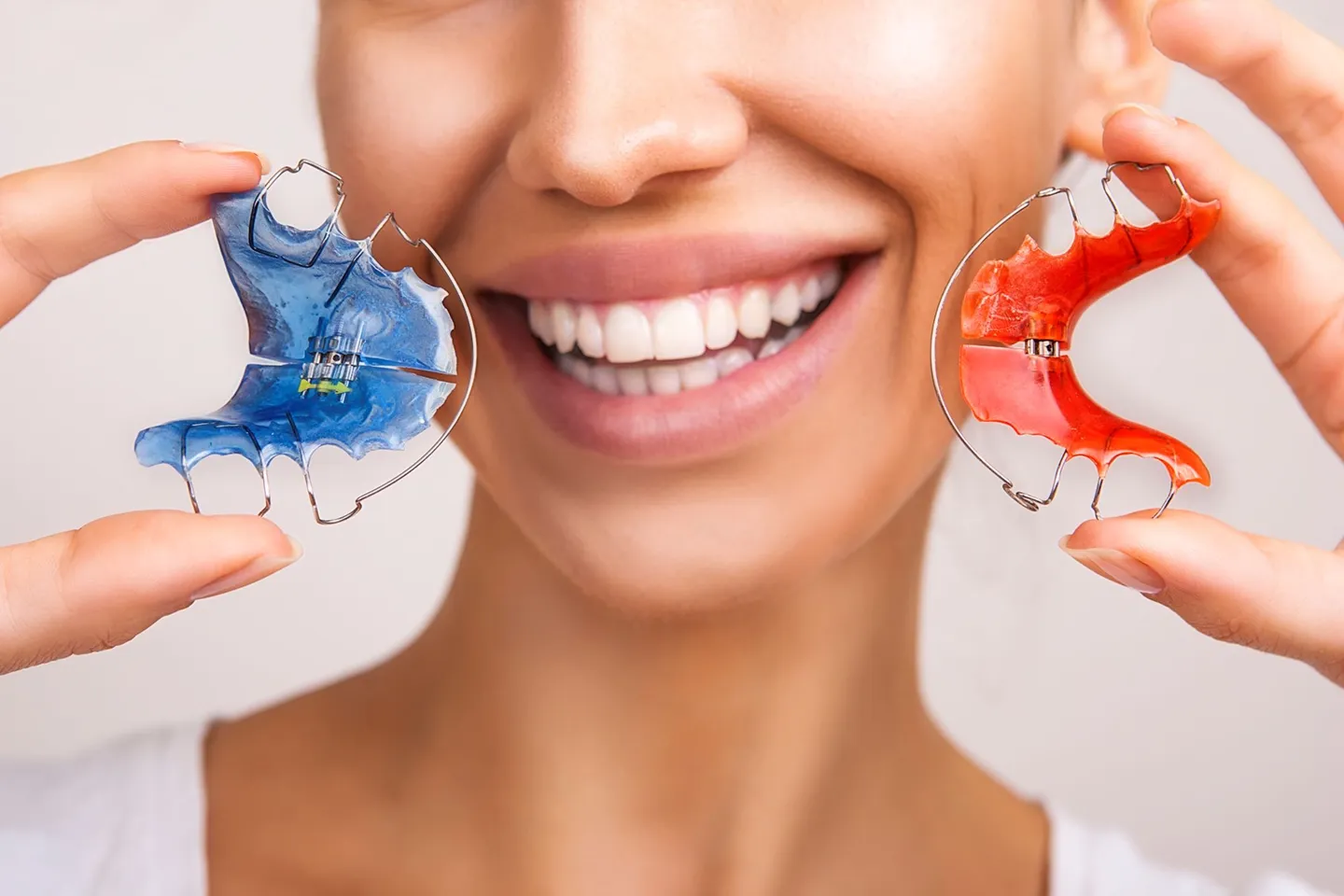
You have had the braces off, or handed back the last aligner. Your teeth look the way you hoped they would. And then someone hands you a retainer and tells you to wear it, and the questions start.
Which type should you have? Is the fixed one better than the clear one?
Do you need both? And why does nobody explain any of this properly until the day it happens?
Here is the plain English version.
Teeth are not set in concrete. They sit in bone, held by fibres that stretch during treatment and spend a long time afterwards trying to pull back to where they started. That pull is strongest in the first twelve months after treatment finishes, but it never fully disappears.
A retainer does one job. It holds your teeth where your treatment left them. Without one, the movement is slow enough that you will not notice it day to day, and obvious enough that you will notice it in a photograph three years later.
We have written separately about how long you need to keep wearing one. The short answer is longer than most people expect.
These are the ones most people picture. A thin, transparent shell moulded to your teeth, worn overnight and taken out in the morning.
At ODL we use Invisalign Vivera retainers. They are made from a digital scan of your mouth rather than a putty impression, which means the fit is precise from the first night. The material is thicker and stronger than the aligners used during Invisalign treatment, because it needs to survive years rather than weeks - at least 30% stronger and twice as durable as other leading clear retainer materials.
Why people like them
The honest downside
They only work if you actually wear them. A retainer in a drawer holds nothing. If you know you are the sort of person who will forget, that is worth saying out loud to your clinician rather than discovering it two years later.
A fixed retainer, sometimes called a bonded retainer, is a thin wire bonded to the back of your front teeth. You cannot see it, you cannot feel it after the first few days, and you cannot forget to wear it.
Why people like them
The honest downside
Cleaning takes more care. You will need to thread floss underneath the wire or use interdental brushes, and plaque builds up around it if you do not. They can also come unbonded without you noticing, which is why they need checking.
Plenty of patients end up with both: a fixed wire on the lower teeth, and a removable retainer over the top for extra security at night. That combination is common and sensible.
You may have been given one of these years ago - a plate of pink acrylic with a wire across the front. They still work, and orthodontists still use them, particularly where a retainer needs adjusting over time.
They are more visible and bulkier than a clear retainer, which is why most patients now choose clear. At ODL, we provide Vivera retainers and fixed retainers.
There is no universal answer, and anyone who gives you one without looking in your mouth is guessing. It depends on how your teeth moved during treatment, how much rotation was corrected, the shape of your bite, and how realistic you are being about wearing something every night.
As a rough guide:
Your clinician will tell you which applies to you and why. If they do not explain the reasoning, ask. It is your mouth and there is no such thing as a silly question about it.
Do not wait. Teeth start moving within days, not months, and the longer you leave it the more likely your replacement will not seat properly.
Contact us as soon as you can. If you still have the broken pieces, bring them. If you have a spare pair from your set, start wearing that one immediately. And because we store your scan digitally, we do not need to start from scratch to make you another.
Yes, and this is one of the most common reasons people come to us. It does not matter where your braces or aligners were done, how long ago it was, or whether that practice still exists. We scan your teeth as they are today and make retainers to fit them as they are now.
If your teeth have already moved a fair way, we will tell you honestly what a retainer will and will not achieve at this point, and what your options are if the movement bothers you. No pressure either way.
With nightly wear, roughly a year per pair before the fit starts to loosen. That is why they come in sets - you rotate to a fresh pair rather than waiting for one to fail.
A new retainer often feels tight for the first few nights, particularly if you have had a gap in wear. That tightness is the retainer doing its job. It settles quickly.
Yes, if your teeth are already in a position worth holding. A clinician will need to check the fit and your bite first.
No. A retainer holds teeth where they are, it does not move them. If your teeth have shifted and you want them back, that is a separate conversation about treatment.
Realistically, yes, at least a few nights a week long term. Teeth keep trying to move for as long as you have them. We go into this properly in our guide to wearing retainers after braces.
ODL Dental Clinic is a Diamond Apex Invisalign provider in the City of London, rated 4.9 on Google from over 1,570 reviews, with more than 10,000 orthodontic treatments completed. We are at 31 Finsbury Circus, minutes from Moorgate, Liverpool Street and Bank, and open until 8pm Tuesday to Thursday and on Saturday mornings.
Whether you were treated here or somewhere else, we can help.
See our retainer options and prices or get in touch and we will call you back.


